There truly is no place like my homeland. While it has been tainted with political vindictiveness from the former government, SVG (St. Vincent and the Grenadines), has always brought me a profound sense of special joy whenever I visited. Each trip felt like a homecoming, with the warmth of the island’s bright sun reflecting the warmth of its people. Yet, there was undeniably a heaviness about the island—young minds unemployed or underemployed, a dilapidated infrastructure, and a severe case of cronyism that permeated this once-blessed paradise. However, as logic dictates, everything has an end; on November 27th, a new government was ushered in by the former opposition party, NDP, marking a pivotal moment in our history. Jubilation filled the airwaves both in the diaspora and in SVG, reverberating through every heart that longed for a brighter tomorrow. Everyone commented on how light and hopeful the island felt, as if it had finally been relieved of a long-standing blight. On January 3rd, I flew to SVG to join part of my family who had ventured there a week ahead of me, eager to witness the changes firsthand. I can truly attest to feeling a welcomed transformation encompassing the island—there was vibrancy, optimism, and a lightness I hadn’t felt in years whenever I stepped foot on this cherished land. My hat off to the new government of SVG for taking the reins and, just as importantly, for adopting a holistic approach towards governance that values every member of the community. From the smallest children exuberantly playing on the streets to vendors energetically selling their goods and visitors marveling at the scenery, there is a profound sense that change is in the air, and the people are embracing it with open arms. My greatest hope is that the new government will continue to fulfill their mandate for governing the country effectively and transparently, ensuring that the rich cultural heritage and stunning natural beauty of SVG are preserved for future generations. Furthermore, I hope that the people, both at home and in the diaspora, will roll up their sleeves and actively engage in the efforts to move the country forward, contributing their skills and passion to the nation’s development. May God continue to bless the government and the people of SVG, so that together we can forge a brighter and more prosperous future.
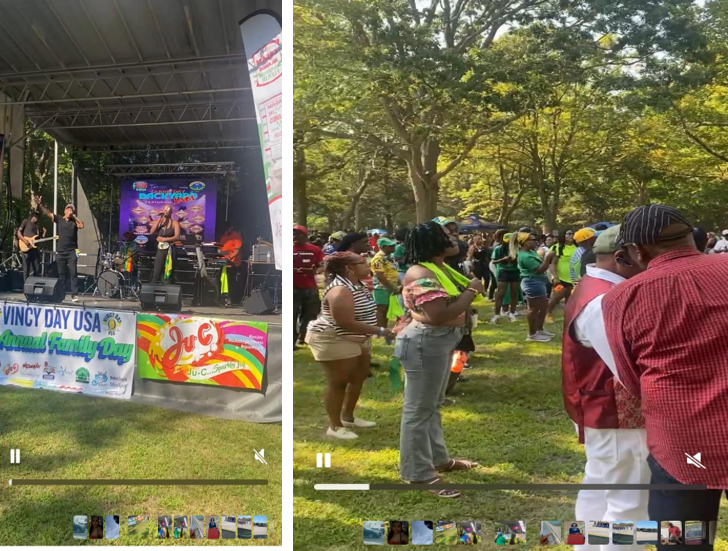
On August 16th, 2025, my daughter and I attended the yearly Vincy Day celebration at Heckscher State Park on Long Island, New York. This event has become an essential part of our annual calendar, a time dedicated to reconnecting with our roots and celebrating the vibrant culture of St. Vincent and the Grenadines. Because we regrettably missed last year’s festivities due to a family wedding, this year felt particularly significant. The anticipation was palpable as we woke early that morning, the warmth of the summer sun peeking through the windows, motivating us to prepare our favorite dishes. The tantalizing aromas filled our home, creating an atmosphere of excitement and joy, making the day even more special.
After cooking, we packed our SUV with not just food, but also a tent, tables, and chairs, ensuring we had everything we needed to enjoy a full day of mingling and feasting with our brothers and sisters from our beautiful island nation. The drive to the park was filled with chatter; my daughter and I reminisced about previous Vincy Days, recalling the laughter and joy we shared, fostering a sense of adventure as we looked forward to creating new memories.
Over the years, one of the most remarkable aspects I have come to admire about this event is how thousands of Vincentians gather without incident. It is heartwarming to see people from the Caribbean, Canada, and various cities across the United States converge on Heckscher State Park, all sharing a common bond rooted in our heritage. The moment we arrived, laughter and cheerful greetings filled the air, making it quickly apparent that this gathering transcends mere festivities—it is a reunion of old friends and families. Neighbors and colleagues, who may not have seen each other in years, embrace and reconnect, celebrating the enduring bonds that tie us to our homeland. The atmosphere buzzes with an undeniable camaraderie, where there is no room for politics, violence, or old grudges—just a peaceful celebration under the warm summer breeze of Long Island.
Every participant celebrates our unique culture in his or her own way, each contribution enriching the rich tapestry of the day by sharing meals and stories of life back home. It is an incredible experience to witness: nothing is sold here. Instead, every dish is a generous gift, an offering woven with memories and nostalgia, each bite echoing the flavors and warmth of our island life. As we partake in the diverse array of dishes, from familiar homemade favorites to delightful surprises brought by others, we find joy in sharing and reminiscing, reliving precious moments from the past. The tantalizing aromas waft through the air, mingling with laughter and shouts of delight from children playing nearby, creating a vibrant symphony of joy and togetherness.
Music also plays a pivotal role in setting the atmosphere for this gathering. The enchanting sounds of calypso, reggae, and gospel echo throughout the park, forming a vibrant backdrop that captures the very essence of Vincy culture. The rhythmic tempo beckons many to dance; both young and old moving together, swaying to the beats, each step a testament to our history and identity. Whether dancing or simply enjoying the music, there is a collective revelry in the joyous atmosphere, where smiles are abundant and connections are deepened, reinforcing the bonds we share as a community.
To say I am proud of the spirit of this event is an understatement. I am immensely grateful to those who diligently plan and organize this gathering year after year, working tirelessly to ensure it remains a vibrant part of our community. Their unwavering commitment to preserving our cultural heritage fills me with admiration. I am also thankful for the unbreakable spirit of our people, for our profound love for our blessed homeland, and for our shared ability to come together peacefully. This event serves as a vital cultural tool in the diaspora, a reminder of our roots and a way to keep our heritage alive with dignity and love.
As we dance and share stories, I often reflect on the importance of this celebration. It extends beyond simple festivities; it signifies resilience and unity. My heartfelt hope is that we never let this event die; that it will continue to flourish and adapt through the years, enriching the lives of generations to come. May we always find strength in each other, keeping the essence of our homeland close to our hearts as we build connections, celebrate culture, and pass on the legacy of our beautiful island to future generations. This gathering not only strengthens our current ties but also lays a foundation for our children and grandchildren, ensuring they too can partake in the beauty and memories of our shared heritage.
In April 2024, I arrived on the sunny shores of St. Vincent and the Grenadines with a sad heart, burdened by the weight of loss. I was here for the final farewell to my beloved mother, who passed away at the age of 87, leaving a void that would be felt deeply by our entire family. Being one of a family of 14 children, we had to be creative in finding lodging to accommodate all the children, grandchildren, and great-grandchildren, as well as spouses, which required intricate planning and coordination. My brother Augustine and his family stayed with me, and together we shared unique stories and memories of my mother, and as we gathered, we found comfort in sharing those cherished moments. I visited my hometown Barrouallie (affectionately known as Bagga), trying to capture some of the familiarity from my childhood, where the warm sun and gentle breeze carried echoes of laughter and love. It was a somber time for our family, yet we were committed to finding solace in the midst of our grief in some form or another, whether through reminiscing, sharing meals, or simply sitting together in silent reflection. Being outside of the capital city, Kingstown, there are not many restaurants or bars to go to; the local spots hold their own charm but are limited. One night, my nephew called. “Auntie,” he said with excitement, “there is a nice restaurant in Bagga called RHE’s. Let me take you there.” We packed my family in the van, ensuring everyone was settled, and off we went, the anticipation of enjoying a meal together providing a small reprieve from the sadness that surrounded us. The laughter and chatter in the van served as a reminder that even in sorrow, family bonds could bring joy and a sense of togetherness.
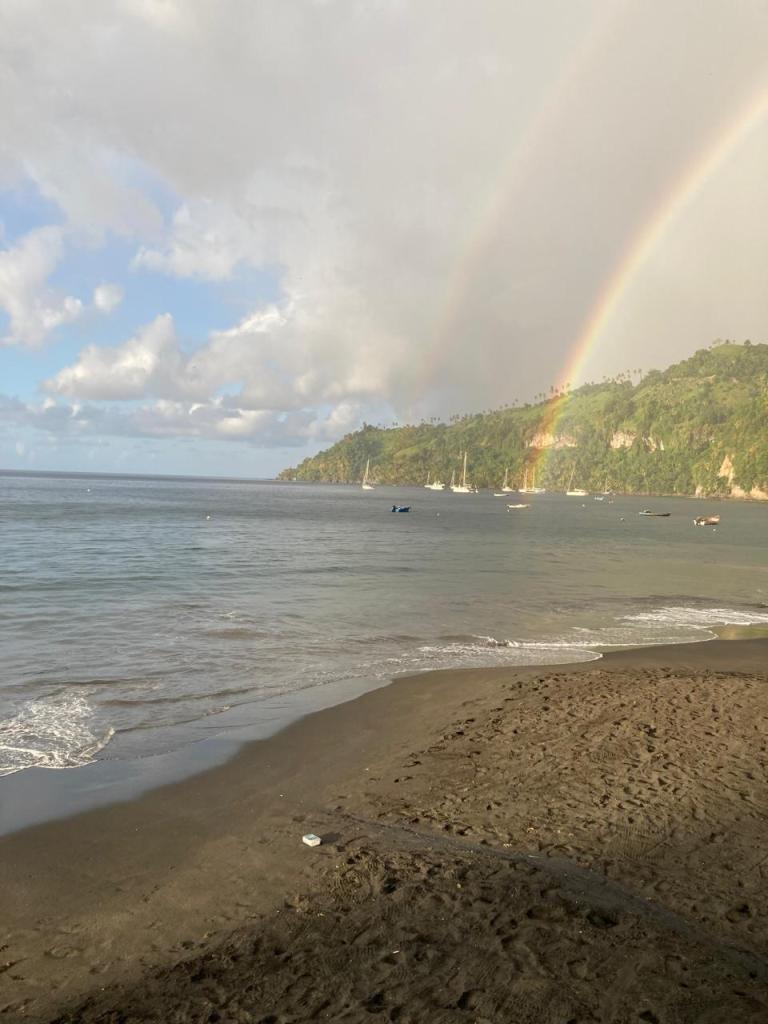
Located on the western side of the island, Bagga and its surrounding areas possess volcanic black sand instead of the customary white sand, providing a unique and striking landscape that captivates visitors. It is not unusual to see natives using the black sand as a skin exfoliant, appreciating its natural properties and crafting traditional beauty rituals that have been passed down through generations. RHE’s is in an enviable spot that allows guests to walk directly onto the pristine shores of Morgan’s Bay, where the gentle waves lap against the black sand, creating a tranquil atmosphere perfect for relaxation. The restaurant can be entered from either Morgan’s Bay or a narrow path from the main road, offering convenient access for both beachgoers and those exploring the area. Whichever way you enter, RHE’s friendly staff is there to make you feel at home, greeting you with warm smiles and a welcoming attitude. The manager observes the operation intently, ensuring every guest is well cared for, proactively addressing any needs that may arise. The staff goes above and beyond to create that feel of home away from home by getting to know you and remembering your preferences, adding a personal touch to your dining experience. This dedication to service and the stunning natural surroundings make RHE’s a cherished destination for locals and tourists alike.
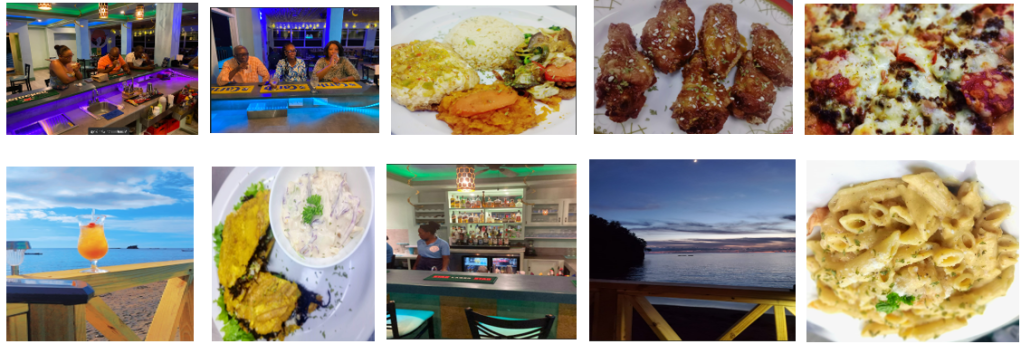
To my pleasant surprise, RHE Beach House Restaurant and Bar was a true delight that far exceeded my expectations. The food was not only delicious, but it was also artistically presented, making each dish a feast for the eyes as well as the palate. The ambience, with its soft lighting and tasteful decor, was mesmerizing, creating a welcoming atmosphere where I felt completely at ease, and the service was divine, with attentive staff who went above and beyond to ensure a wonderful dining experience. The indoor dining area is great, but you also have the delightful option of outdoor dining where you can savor your meal while facing the gentle breeze of the pristine black sand beach of Morgan’s Bay, listening to the soothing sound of the Caribbean sea lapping against the shore. RHE captures the true essence of St. Vincent, specifically Bagga, a famous fishing town known for its vibrant seafood culture. Bagga is particularly famous for its delectable blackfish, and RHE delivered blackfish in various enticing forms—blackfish plantain cup, blackfish cakes, and an array of beautiful flavors that showcase the culinary heritage of St. Vincent. Each dish was a reflection of the local culture, crafted with fresh ingredients sourced from nearby waters and land. Additionally, upstairs houses a three-bedroom guest house, providing guests with access to shelter and food, as well as a luxurious experience that includes lounging on the beautiful black sand beach, making it the perfect destination for anyone looking to unwind and indulge in the natural beauty of the island.
When I visit St. Vincent and the Grenadines, RHE’s is an absolute must on my list of places to eat. There are many reasons why I hold this restaurant in such high regard: its unwavering diligence in highlighting our local natural foods, the innovative way it brings together a variety of our distinct flavors to create a unique culinary experience, along with its quaint and charming location that adds to the overall ambiance. Additionally, the staff consistently showers patrons with attentive and winning service, ensuring that every visit feels special and memorable. The combination of these elements creates a dining experience that is both enjoyable and enriching. In short, RHE’s has a genuine Caribbean flair that shines brightly through every dish and interaction. Its unique brand of authenticity is simply second to none, making it a culinary gem that I highly recommend to anyone visiting the island.
As my memory sheds events to make room for the mountain of occurrences over my many years on this earth, few events remain a permanent memory in my mind – the birth of my children, the death of my parents, and the eruption of La Soufrière in 1979. La Soufrière is an active volcano on the island of St. Vincent. At 4,052 feet, the majestic peak hovers above the northern flank of the island like a giant claiming his turf. Growing up, I always heard stories of the volcano, whispered in tones of reverence and fear, and even had the temerity to climb it once, wanting to mesh the reality with the legend. The enormous crater in the middle of the mountain is truly one of the wonders of the world, a natural marvel that evokes both awe and trepidation.
I remember hearing that my paternal grandmother was a baby during the eruption in 1902 when her family had to flee their farm located under the volcano. The family was permanently relocated to the village of Troumaca, and this event resonated through generations, no doubt planting seeds of resilience and adaptability in my family. Years later, my great-aunts would take my father and his siblings back to the area to show them where their ancestral farm once stood, offering them a glimpse of a past both cherished and lost. This was no doubt a traumatic yet nostalgic reminder to them of a time lost, a nuanced tapestry of emotions interwoven with love and sorrow that shaped our family’s narrative. In my first novel, ‘Beneath The Golden Mango Tree,’ Felicia, the protagonist, shares some similarities with me when she recounts getting a visa to come to America during the 1979 eruption of La Soufrière. She, like me, believed that she might have gotten a visa because of La Soufrière, reflecting a shared experience that transcends mere narrative into something more profound. The island of St. Vincent was in disarray after that eruption – people displaced, school closures rampant so schools could be converted to shelters. The look and smell of ashes everywhere permeated our lives with a grim reminder of nature’s unpredictability; noses were covered to minimize inhalation of the ashes.
I remember that day vividly. It was Good Friday, April 13th, 1979. My family of 16 (my parents and 14 kids) lived in rural Wallilabou on the outskirts of Barrouallie, a setting that fostered strong familial bonds as we navigated life’s twists and turns. As is customary, my mother, my older sister, and I arose early to start the Good Friday tradition of baking hot cross buns for our family, an act filled with love and anticipation of gathering. Our father was the district agriculture officer at the propagation station, a role that kept him deeply connected to the land, and our mother ran a small shop and bakery from our home, which often served as a place for people working on the estate to get groceries and bakery items, creating a community space that welcomed everyone. Very early that morning, we heard the screams and shouts of people running past our gate, clinging to what little humble possessions they were able to grab, their faces etched with panic and fear that was palpable in the air. My mother ran to the gate. “What’s wrong?” she asked of the crowd as they ran along the narrow street, her maternal instincts kicking in. “E Soufrière ah blow,” one woman screamed. The news rippled through our home like wildfire, igniting a sense of urgency in our home. My mother yelled to me and my sister, “Make more cross buns and send me what you have,” she pleaded, her voice a mix of calm and determination in the face of chaos. I rushed a large container of hot cross buns to her as I dove back inside to help my sister start another batch, our family workforce rallying together in a time of crisis. One of my younger siblings joined our mother as she handed each fleeing person a cross bun, a small act of kindness that became a symbol of hope amid despair. Before long, my cousin Wesie from nearby Spring Village came by on a donkey, a sight that brought a wave of relief as family connections strengthened during tumultuous times. He held the smaller children on the donkey while the other family members walked briskly on foot, a makeshift caravan of love and support. “Where you all going?” asked Mother, her concern evident. “Cuz, wherever we could get a place to stay,” he responded, fear palpable in his tone. Being the big-hearted person she was, Mother invited the entire family to stay with us, instinctively knowing the importance of togetherness in times of upheaval. Luckily, we had an additional house in our yard that could accommodate them, a blessing in the form of space amidst chaos. Before long, my maternal grandmother and cousins arrived, and so did relatives from my paternal side, creating a rich tapestry of family intertwining as we braved the storm together.
With an already big family of 16, our house was crammed, but my mother never complained; instead, she adjusted to the circumstances, orchestrating chaos with grace and love. I remember her going into Kingstown to buy a couple of huge pots that were more like drums, representing our resolve to nourish and care for everyone around us. Cooking on a stove or even a coal pot was not an option with pots that size, and necessity became the mother of adaptability. My father erected several fireplaces comprising three large stones, ingenuity overriding inconvenience. My brothers plied them with wood gathered in the fields and meadows around Wallilabou, tinkering and collaborating in the midst of crisis. Callaloo and pea soups were regular meals, hearty and warm, symbolizing the unity that flourished even in adversity. Together, we huddled and cooked, ate, slept, and shared stories, reconnecting with the past and catching up on our current lives, weaving narratives that echoed the resilience of our ancestors. Echoes of La Soufrière’s fury surrounded us daily, as the volcano spat ashes around the island, shooting flames into the sky, its ominous presence becoming a part of our daily conversation. Its roar was heard deep into the center of the island, a haunting reminder of nature’s power and unpredictability. Since most Caribbean homes are built with ventilation, my father had to cover the ventilation spaces to keep the ashes out, a protective measure that underscored his dedication to his family’s safety. As luck would have it, we were the last family on that side of the island allowed to stay in our home; the decision felt like a breath of relief. The police stood by our gates each day to ensure no one went north without a good reason, an unyielding sentinel amidst chaos. Farmers were allowed to go to their farms to tend to animals and crops, a small semblance of normalcy in our disrupted lives. My mother was always there supplying the officers with food as they stood at their post, ensuring that humanity could shine through even in the hardest of times. One day, my grandmother needed something from her house up north in Troumaca, so my brother Bert, my cousin Steve, and I decided to trick the officers, knowing there was no malice in our hearts but a deep desire to assist our family and see up close what La Soufrière looked like. We knew they would let us go to check on our farm and animals, so we pretended we were going to the farm. After being hoisted onto a donkey we set out with my brother and cousin on foot, a young trio fueled by purpose and curiosity. All went well until we got to Troumaca, where the rumbles shook us to our core. The volcano started to roar, spitting fire and ashes furiously, its wrath palpable to our senses. I had seen remnants of its fury from a distance but not in full effect, and the sight was both terrifying and awe-inspiring. My brother and cousin ran to my grandmother’s house, grabbing what items she wanted, frantically yet determined. My brother helped me onto the donkey, urging it forward as we made our way back home, the urgency of the moment weighing on us heavily, but we were determined to help our grandmother. The days, weeks, and months that followed saw Barrouallie develop into what looked like a refugee town, with the displaced North Leeward (Western) residents trying to ride out the fury of La Soufrière and the residents exhibiting such humanity in accommodating as many as they could, embodying a spirit of solidarity while others stayed at the camps, creating a microcosm of resilience in the face of tragedy. The same scene played out on the North Windward (Eastern) side of the island, but I was not intimately a part of that side of events, as my perspective was rooted in the adventures and stories shared by those around me. I left for the US later that year, the air thick with memories of heartache and love intertwined. Most of the relatives had returned home, and camps were closed as life sought to regain its shape; but many people never made it back to the North, many lamenting that they could never live so close to the volcano again, their hearts forever marked by that experience. Every Good Friday, I remember that day in 1979 when the fury of La Soufrière caused such fear and destruction in its wake but rendered such emotions in human charity and delivered unexpected rewards. The crops that year were bountiful because of the fertilizing effects of the volcanic ash, a bittersweet irony that marked the year in vivid contrast with the chaos we endured, and Vincentians like me likely had an easier chance of getting visas due to the upheaval caused by the volcano. As far as I know, there were no deaths from that eruption, but residents in 1902 were not so lucky. Some 1,600 souls were lost, a ghostly reminder that nature could be capricious and unyielding. Even more devastating for the region was that hours after La Soufriere’s eruption, Mount Pelée in Martinique erupted, echoing an even worse tragedy than we faced. One of the few people who survived in that island’s capital of Saint-Pierre was a prisoner in an underground jail cell, a twist of fate that would later see him become somewhat of a celebrity due to his perplexing survival story. I remember an earlier eruption in 1971. The indigenous people on the northeastern side of the island were displaced, and their stories continue to linger like a haunting echo in my memory. I recall a local calypsonian singing:
“Caribs running wild
and if you hear them
the Soufrière ah boil
Mr. Premier, carry we a town
before the sulfur come down.”
This was doubtlessly seen as jovial social commentary, the singer no doubt unaware of the trauma involved in the minds of the people passed down from oral histories, a dissonance that resonates deeply within the fabric of their culture. Among the dead in 1902 were many indigenous people whose lungs were scorched, victims of a violent reminder that they were not likely to stay in the path of an erupting volcano. Having seen the 1979 eruption firsthand, I was more aware of the dangers and hence more empathetic to those within its path, the empathy rooted in my lived experience. In 2021, there was another eruption around the Easter holiday, a reminder that nature’s unpredictability knows no bounds. My daughter ran into my room, “Ma, St. Vincent is on the news. The volcano is erupting,” her voice laced with urgency and concern. I remember holding my head in my hands in shock, the weight of memories flooding back. It was like watching the eruption of 1979 again, every emotion crystallizing in me anew. But I wasn’t there to help; I could just watch, helpless as the unfolding drama echoed the past. “We have to do something,” she shouted, her heart ablaze with the desire to assist.
So we came together and did what little we could to help those displaced, collaborating to extend a lifeline to those in need. With the help of Standard Shippers and many Vincentians and Belizeans, we were able to put together a shipment of products. I must commend my daughter, who did most of the shopping, embodying the compassion and energy of our lineage, and my son, who did the pickups to pack the crates, a lesson in teamwork and shared responsibility. The Medical Relief Association on the ground in St. Vincent did the heavy lifting of distributing the items, ensuring that our collective efforts met the needs of those affected. I often wonder what made my children so eager to help. Perhaps my tales of the horrific eruption of 1979 evoked some humanity in them, a connection to their roots that awakened a fire within. I am not sure, but when they saw the eruptions on the news, this was their ancestral home, and these were their people. It was time to act, and they rose to the occasion, reminding me that the heart of our community beats strong through the generations. And so today during this Easter weekend, I reminisce about the fury of nature and the ways in which it brings out the best in us as a nation. Some may see it as PTSD, but I see it as a time of reflection, a poignant reminder of our collective strength, resilience, and the profound bonds we share in the face of adversity.
As part of my social well-being, I always ensure that my life is a medley of peace and quietness mingled with social interactions. I spend countless hours writing, but I always stop to walk or go into the city for lunch, as these breaks rejuvenate my spirit and keep my creativity flowing. I enjoy the simplicity of life as much as the complexities, finding joy in the little moments of laughter and connection with others. The importance of a healthy balanced life is knowing how to balance life efficiently, recognizing when to retreat into solitude for reflection and when to engage with the vibrant world around me. Socialization can come in the most basic way yet offer so many rewards; a smile from a stranger or a heartfelt conversation with a friend can uplift one’s entire day. Going to the sea and soaking in the cool water while the waves lap rhythmically along the shore is the stuff that relaxation apps are made of, providing a serene escape that nourishes the soul. The last two weekends, I visited my hometown Barrouallie A.K.A Bagga. This is a picturesque, quaint fishing community that bustles with the simple intricacies of life 24 hours, characterized by a sense of unhurried pace and timeless charm. It is the town that never sleeps, wrapped in a comforting blanket of familiarity and warmth. This town is known for its blackfish and particularly the very coveted blackfish crips, a local delicacy that is both flavorful and steeped in tradition. Even local restaurants like Rhe’s Restaurant showcase blackfish delicacies that are uniquely theirs, often prepared with recipes passed down through generations.
Bagga’s fish fest is a monthly event that draws people from around the island, turning the streets into a lively canvas of culture and flavor. Locals and tourists converge on the town to enjoy the food, music, and jovial exchanges that fill the air with laughter and connection. Visiting this town is truly a trip down culture alley, rich with experiences that forge bonds between people. This is a town that is always evolving but always maintaining its core culture, reflecting a beautiful blend of tradition and modernity. You never know what you will see when you visit this town; it might be a spirited funeral with music and dancing around town, a joyous celebration of life, or young people gathering at a music fair, expressing their creativity and passion for art. Vendors along the streets line up with trays of vegetables, fruits, and homemade snacks, each one telling a story of the land from which they come. Farmers making their way home after a long day of toiling, as fishermen enlist the help of villagers to pull in the nets with their daily catch, creates a vivid tableau of the interconnectedness of community life. One of the most beautiful things is to see the children gleefully swimming around the beach, splashing around with such innocence and joy. They may take it for granted because it is a part of their daily routine, but this is the stuff people pay money to travel and enjoy—the simple, pure pleasures that resonate with the heart.
As I am re-reading my books before loading them electronically onto my blog, I realize that they are heavily laced with Vincentian history and culture from start to finish, woven intricately into the fabric of my narrative voice. It is so interesting how our upbringing can heavily influence us, and how much our entire lives are saturated with the environment from which we came – our families, neighbors, customs, and lifestyles. Each page captures not just a story but a sense of place and belonging, reflecting the rich tapestry of Bagga’s influence on my journey. I hope the essence of Bagga never dies, for it is a repository of memories and experiences that shape who I am. There are not many places you can go back to 45 years later and still see a life that is reminiscent of the way you knew it, where the past seamlessly intertwines with the present in the most beautiful way. The people work hard to make sure they can reasonably enjoy most modern amenities, but they work just as hard to ensure their old way of life never dies, and remain a constant reminder from whence they came, preserving the spirit of Bagga for generations to come.
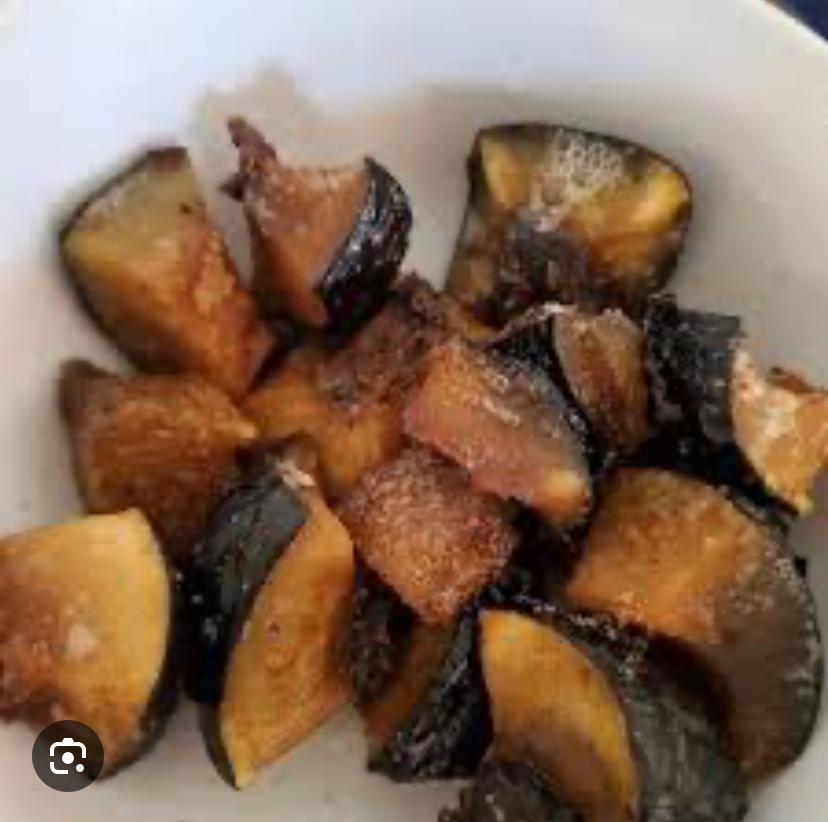
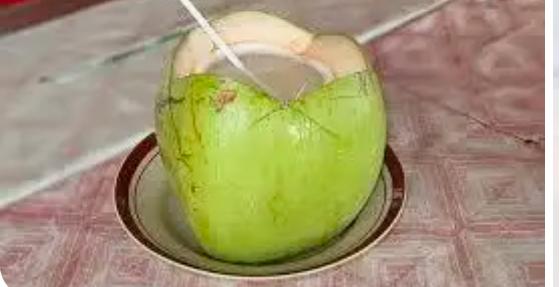
Living in the bustling state of New York, I grew used to conveniences at my fingertips. I took such things for granted, because they were always there, and I never saw it as something that, in some ways, can adversely affect my health. If I needed something in the pharmacy, bank, or supermarket, it was right there, almost like a comforting blanket of accessibility that wrapped around my daily life. When I felt like working out, the gym was close by, and there were scores of fast-food restaurants around me, making it all too easy to indulge in unhealthy choices at a moment’s notice. Stepping out to life in the Caribbean may seem like moving to a less developed lifestyle, but in some ways, it may be a blessing in disguise. I may not have many businesses close by, but that only forces me to walk more, reconnecting me with the simple pleasures of life. I may not have access to a gym, but I mentioned in an earlier post that I got in the habit of walking back and forth in my hallway 50 times per day, which has become my way of incorporating exercise into my routine. So, I get my steps in, and I also get additional exercise from walking to the store, the beach, or around the city to do my shopping, allowing me to soak in the vibrant surroundings, the colors, and the sounds of life. I eat more homecooked foods because there is no Domino’s Pizza or McDonald’s, or Wingstop close by, so I know what I am putting in my body, making conscious choices about my nutrition. Not only do I eat more homecooked foods, but I eat healthier options as well, finding joy in having meals prepared for me from scratch, with locally sourced ingredients. My salads are made from fresh, organically grown vegetables, and so is my meat, often acquired from local butchers who take pride in their skills. Although I spend a lot of time in front of my laptop writing, I always make sure to get up regularly and move around the house, stretching my limbs and refreshing my mind. I spend time visiting relatives and engaging in hearty reminiscences of our life in days of old, sharing stories that connect us to our roots and heritage. I embrace the country as it is today, understanding that times always evolve, but I try to maintain some of the old customs, which enrich my life with a sense of continuity. Most importantly, I remove my American lens from the way I view the Caribbean, striving to appreciate its uniqueness and cultural richness. My view is not that of a tourist who visits the Caribbean via a resort or who gets driven around by a tour bus. I see nothing wrong with that indulgence, but the Caribbean is most beautiful in its natural form, when you live in a town or village among the people or jump into a minibus to get around, feeling the sea breeze and the warmth of the sun on your skin. There is also something special about stopping at a stand in the local market or along the road to buy some fruits and vegetables or drink some coconut water straight from the nut, experiencing the true flavors of the region. Let’s also not forget the roast corn the vendors sell by the roadside, a simple yet delightful snack that reminds me of the joy found in local cuisine. This past Friday, I attended the local Fish Fest in the fishing town of Barrouallie, which turned out to be a delightful highlights in my new life. There was a live band playing infectious rhythms, and vendors selling a myriad of fish and local dishes around the town, filling the air with tantalizing aromas that beckoned everyone to indulge. There was a sea of people from all over the island who converged on Barrouallie, coming together as a community to celebrate the abundance of the sea. My main interest was eating some blackfish crips, which are a local delicacy, native to that town for ages, evoking a sense of nostalgia as I savored each bite. The oil from the blackfish crips, which is rich in omega-3 fatty acids, is said to have great medicinal value for everything from the common cold to cardiovascular issues, enhancing my appreciation for the food I consume and its connection to well-being. The Fish Fest was not an event in my days growing up in Barrouallie; it was clearly developed to showcase the town’s tradition while creating an economic outlet for local vendors and fostering a sense of belonging. This was a moment for me to sit and hold onto traditions while embracing healthy changes, realizing the balance between preserving our heritage and adapting to new realities. Differences are healthy; it’s not better or worse, it is just different, reflecting the diverse experiences that shape our lives. Change is good if we are not abolishing our traditions but rather finding ways to showcase and highlight them, like this vibrant festival that celebrates our culture while weaving in the threads of modernity.

 Trish St.Hill