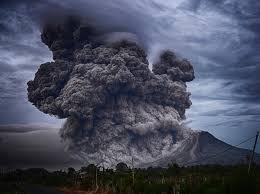
Photo courtesy of Unsplash
As my memory sheds events to make room for the mountain of occurrences over my many years on this earth, few events remain a permanent memory in my mind – the birth of my children, the death of my parents, and the eruption of La Soufrière in 1979. La Soufrière is an active volcano on the island of St. Vincent. At 4,052 feet, the majestic peak hovers above the northern flank of the island like a giant claiming his turf. Growing up, I always heard stories of the volcano, whispered in tones of reverence and fear, and even had the temerity to climb it once, wanting to mesh the reality with the legend. The enormous crater in the middle of the mountain is truly one of the wonders of the world, a natural marvel that evokes both awe and trepidation.
I remember hearing that my paternal grandmother was a baby during the eruption in 1902 when her family had to flee their farm located under the volcano. The family was permanently relocated to the village of Troumaca, and this event resonated through generations, no doubt planting seeds of resilience and adaptability in my family. Years later, my great-aunts would take my father and his siblings back to the area to show them where their ancestral farm once stood, offering them a glimpse of a past both cherished and lost. This was no doubt a traumatic yet nostalgic reminder to them of a time lost, a nuanced tapestry of emotions interwoven with love and sorrow that shaped our family’s narrative.
In my first novel, ‘Beneath The Golden Mango Tree,’ Felicia, the protagonist, shares some similarities with me when she recounts getting a visa to come to America during the 1979 eruption of La Soufrière. She, like me, believed that she might have gotten a visa because of La Soufrière, reflecting a shared experience that transcends mere narrative into something more profound. The island of St. Vincent was in disarray after that eruption – people displaced, school closures rampant so schools could be converted to shelters. The look and smell of ashes everywhere permeated our lives with a grim reminder of nature’s unpredictability; noses were covered to minimize inhalation of the ashes.
I remember that day vividly. It was Good Friday, April 13th, 1979. My family of 16 (my parents and 14 kids) lived in rural Wallilabou on the outskirts of Barrouallie, a setting that fostered strong familial bonds as we navigated life’s twists and turns. As is customary, my mother, my older sister, and I arose early to start the Good Friday tradition of baking hot cross buns for our family, an act filled with love and anticipation of gathering. Our father was the district agriculture officer at the propagation station, a role that kept him deeply connected to the land, and our mother ran a small shop and bakery from our home, which often served as a place for people working on the estate to get groceries and bakery items, creating a community space that welcomed everyone.
Very early that morning, we heard the screams and shouts of people running past our gate, clinging to what little humble possessions they were able to grab, their faces etched with panic and fear that was palpable in the air. My mother ran to the gate. “What’s wrong?” she asked of the crowd as they ran along the narrow street, her maternal instincts kicking in. “E Soufrière ah blow,” one woman screamed. The news rippled through our home like wildfire, igniting a sense of urgency in our home. My mother yelled to me and my sister, “Make more cross buns and send me what you have,” she pleaded, her voice a mix of calm and determination in the face of chaos. I rushed a large container of hot cross buns to her as I dove back inside to help my sister start another batch, our family workforce rallying together in a time of crisis. One of my younger siblings joined our mother as she handed each fleeing person a cross bun, a small act of kindness that became a symbol of hope amid despair.
Before long, my cousin Wesie from nearby Spring Village came by on a donkey, a sight that brought a wave of relief as family connections strengthened during tumultuous times. He held the smaller children on the donkey while the other family members walked briskly on foot, a makeshift caravan of love and support. “Where you all going?” asked Mother, her concern evident. “Cuz, wherever we could get a place to stay,” he responded, fear palpable in his tone. Being the big-hearted person she was, Mother invited the entire family to stay with us, instinctively knowing the importance of togetherness in times of upheaval. Luckily, we had an additional house in our yard that could accommodate them, a blessing in the form of space amidst chaos. Before long, my maternal grandmother and cousins arrived, and so did relatives from my paternal side, creating a rich tapestry of family intertwining as we braved the storm together.
With an already big family of 16, our house was crammed, but my mother never complained; instead, she adjusted to the circumstances, orchestrating chaos with grace and love. I remember her going into Kingstown to buy a couple of huge pots that were more like drums, representing our resolve to nourish and care for everyone around us. Cooking on a stove or even a coal pot was not an option with pots that size, and necessity became the mother of adaptability. My father erected several fireplaces comprising three large stones, ingenuity overriding inconvenience. My brothers plied them with wood gathered in the fields and meadows around Wallilabou, tinkering and collaborating in the midst of crisis. Callaloo and pea soups were regular meals, hearty and warm, symbolizing the unity that flourished even in adversity. Together, we huddled and cooked, ate, slept, and shared stories, reconnecting with the past and catching up on our current lives, weaving narratives that echoed the resilience of our ancestors.
Echoes of La Soufrière’s fury surrounded us daily, as the volcano spat ashes around the island, shooting flames into the sky, its ominous presence becoming a part of our daily conversation. Its roar was heard deep into the center of the island, a haunting reminder of nature’s power and unpredictability. Since most Caribbean homes are built with ventilation, my father had to cover the ventilation spaces to keep the ashes out, a protective measure that underscored his dedication to his family’s safety. As luck would have it, we were the last family on that side of the island allowed to stay in our home; the decision felt like a breath of relief. The police stood by our gates each day to ensure no one went north without a good reason, an unyielding sentinel amidst chaos. Farmers were allowed to go to their farms to tend to animals and crops, a small semblance of normalcy in our disrupted lives. My mother was always there supplying the officers with food as they stood at their post, ensuring that humanity could shine through even in the hardest of times.
One day, my grandmother needed something from her house up north in Troumaca, so my brother Bert, my cousin Steve, and I decided to trick the officers, knowing there was no malice in our hearts but a deep desire to assist our family and see up close what La Soufrière looked like. We knew they would let us go to check on our farm and animals, so we pretended we were going to the farm. After being hoisted onto a donkey we set out with my brother and cousin on foot, a young trio fueled by purpose and curiosity. All went well until we got to Troumaca, where the rumbles shook us to our core. The volcano started to roar, spitting fire and ashes furiously, its wrath palpable to our senses. I had seen remnants of its fury from a distance but not in full effect, and the sight was both terrifying and awe-inspiring. My brother and cousin ran to my grandmother’s house, grabbing what items she wanted, frantically yet determined. My brother helped me onto the donkey, urging it forward as we made our way back home, the urgency of the moment weighing on us heavily, but we were determined to help our grandmother.
The days, weeks, and months that followed saw Barrouallie develop into what looked like a refugee town, with the displaced North Leeward (Western) residents trying to ride out the fury of La Soufrière and the residents exhibiting such humanity in accommodating as many as they could, embodying a spirit of solidarity while others stayed at the camps, creating a microcosm of resilience in the face of tragedy. The same scene played out on the North Windward (Eastern) side of the island, but I was not intimately a part of that side of events, as my perspective was rooted in the adventures and stories shared by those around me.
I left for the US later that year, the air thick with memories of heartache and love intertwined. Most of the relatives had returned home, and camps were closed as life sought to regain its shape; but many people never made it back to the North, many lamenting that they could never live so close to the volcano again, their hearts forever marked by that experience. Every Good Friday, I remember that day in 1979 when the fury of La Soufrière caused such fear and destruction in its wake but rendered such emotions in human charity and delivered unexpected rewards. The crops that year were bountiful because of the fertilizing effects of the volcanic ash, a bittersweet irony that marked the year in vivid contrast with the chaos we endured, and Vincentians like me likely had an easier chance of getting visas due to the upheaval caused by the volcano.
As far as I know, there were no deaths from that eruption, but residents in 1902 were not so lucky. Some 1,600 souls were lost, a ghostly reminder that nature could be capricious and unyielding. Even more devastating for the region was that hours after La Soufriere’s eruption, Mount Pelée in Martinique erupted, echoing an even worse tragedy than we faced. One of the few people who survived in that island’s capital of Saint-Pierre was a prisoner in an underground jail cell, a twist of fate that would later see him become somewhat of a celebrity due to his perplexing survival story.
I remember an earlier eruption in 1971. The indigenous people on the northeastern side of the island were displaced, and their stories continue to linger like a haunting echo in my memory. I recall a local calypsonian singing:
“Caribs running wild
and if you hear them
the Soufrière ah boil
Mr. Premier, carry we a town
before the sulfur come down.”
This was doubtlessly seen as jovial social commentary, the singer no doubt unaware of the trauma involved in the minds of the people passed down from oral histories, a dissonance that resonates deeply within the fabric of their culture. Among the dead in 1902 were many indigenous people whose lungs were scorched, victims of a violent reminder that they were not likely to stay in the path of an erupting volcano.
Having seen the 1979 eruption firsthand, I was more aware of the dangers and hence more empathetic to those within its path, the empathy rooted in my lived experience. In 2021, there was another eruption around the Easter holiday, a reminder that nature’s unpredictability knows no bounds. My daughter ran into my room, “Ma, St. Vincent is on the news. The volcano is erupting,” her voice laced with urgency and concern. I remember holding my head in my hands in shock, the weight of memories flooding back. It was like watching the eruption of 1979 again, every emotion crystallizing in me anew. But I wasn’t there to help; I could just watch, helpless as the unfolding drama echoed the past. “We have to do something,” she shouted, her heart ablaze with the desire to assist.
So we came together and did what little we could to help those displaced, collaborating to extend a lifeline to those in need. With the help of Standard Shippers and many Vincentians and Belizeans, we were able to put together a shipment of products. I must commend my daughter, who did most of the shopping, embodying the compassion and energy of our lineage, and my son, who did the pickups to pack the crates, a lesson in teamwork and shared responsibility. The Medical Relief Association on the ground in St. Vincent did the heavy lifting of distributing the items, ensuring that our collective efforts met the needs of those affected.
I often wonder what made my children so eager to help. Perhaps my tales of the horrific eruption of 1979 evoked some humanity in them, a connection to their roots that awakened a fire within. I am not sure, but when they saw the eruptions on the news, this was their ancestral home, and these were their people. It was time to act, and they rose to the occasion, reminding me that the heart of our community beats strong through the generations. And so today during this Easter weekend, I reminisce about the fury of nature and the ways in which it brings out the best in us as a nation. Some may see it as PTSD, but I see it as a time of reflection, a poignant reminder of our collective strength, resilience, and the profound bonds we share in the face of adversity.
 Trish St.Hill
Leave a comment